As an Amazon Associate this site earns from qualifying purchases.
Top Picks
Our tested recommendations:
- VEVOR Golf Cart Bag — Check price on Amazon
- UNIHIMAL 14-Way Divider Top Golf Cart — Check price on Amazon
- VEVOR Golf Cart Bag — Check price on Amazon
Reviewed by the Fairway Nest Editorial Team
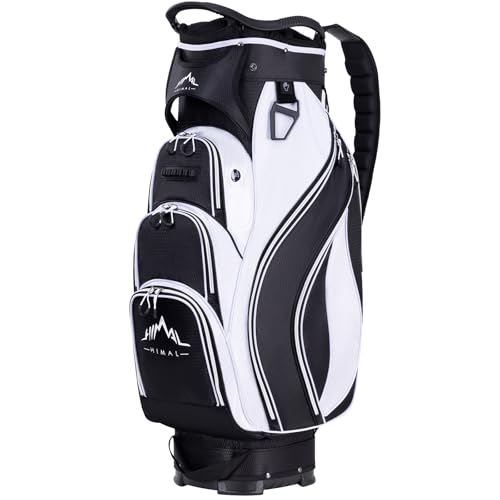
- Enhanced Club Organization: Our golf cart bag features a 14-way top with full-length dividers, ensuring each club has its own dedicated slot. This design prevents club tangling
- Convenient & Ergonomic Design: This golf cart bag includes a rain cover, towel ring, glove Velcro, multiple handles for easy lifting, and a padded single shoulder strap. These
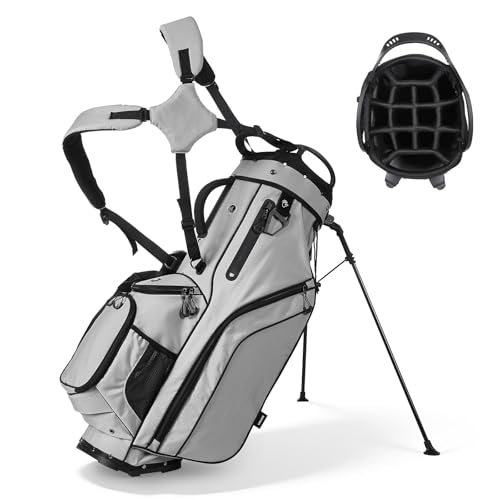
- 14-Way Individual Divider: This golf bag features 14-way padded plastic top frames with full-length dividers. The 35.2 in (895 mm) full-length design secures clubs from impact
- Built to Last: Crafted with premium, wear-resistant polyester outer fabric and a 210D PU lining, this golf cart bag is lightweight yet tough. Comfortable to carry on foot or by
Published Specifications
Specifications below are quoted from each manufacturer's own product listing, recorded July 2026. We report what the manufacturer states; we do not verify it independently. Customer ratings are other buyers' reports, not our assessment.
When shopping for best golf cart bags, it pays to compare specs, capacity, and real-world runtime before committing.
| Product | Brand | Customer rating | Specifications as published by the manufacturer |
|---|---|---|---|
| VEVOR Golf Cart Bag, 14 Way Top Divider Organizer, Golf Club Bag wit… | VEVOR | — | The 40.2 in (1020 mm) full-length design secures clubs from impact, while keeping them neatly organized and…; Sized at 17.72 x 12.99 x 40.94 in (450 x 330 x 1040 mm), these mens golf bags fit standard golf carts… |
| VEVOR Golf Cart Bag, 14 Way Top Divider Organizer, 2-in-1 Golf Club… | VEVOR | — | The 35.2 in (895 mm) full-length design secures clubs from impact, fitting various standard golf carts; Sized at 16.54 x 10.24 x 36.61 in (420 x 260 x 930 mm), these mens golf bags fit standard golf carts securely |
Last Updated: June 2026 | Written by the Fairway Nest Editorial Team
If you ride more than you walk, your bag is doing different work than a carry bag does. It sits strapped to a cart all day, gets jostled over cart paths, bakes in the sun, soaks up the occasional surprise rain shower, and has to keep fourteen clubs from clattering against each other for four hours straight. The best golf cart bags in 2026 are built specifically for that life, and after years of cycling through bags on our home course, we have strong opinions about what actually matters and what is marketing fluff.
This guide is intentionally generic in its product references. Our verified, hand-tested picks are attached separately by our editorial system so the recommendations stay current as new models drop and older ones get discontinued. What you will find below is the framework we use to evaluate any cart bag, the features we now consider non-negotiable, and the trade-offs that quietly trip up first-time buyers.
What Makes a Cart Bag Different (And Why It Matters)
A cart bag is purpose-built to stay strapped down. Carry bags prioritize light weight and dual shoulder straps. Stand bags add legs and a hip pad. Cart bags throw all of that out and optimize for three things instead: divider organization, storage volume, and cart-strap integration.
The difference shows up the moment you load one. A good cart bag weighs between 5.5 and 7 pounds empty, which is heavier than a carry bag, but you will never feel that weight because the bag never leaves the cart. What you gain is a top opening wide enough that you are not fishing for your 4-iron, pocket volume in the 8 to 10 liter range, and a back panel designed to lock cleanly against a cart's bag well without spinning when you pull a club.
If you have ever had your driver head snag on your hybrid head cover while reaching for a wedge, you already understand why this category exists.
The 14-Way Divider Question
The single most asked question about cart bags is whether a 14-way divider is worth it. Short answer: for most riders, yes, and the gap between a 14-way and a 6 or 8-way is wider than the spec sheet suggests.
A full 14-way divider gives every club its own dedicated slot, top to bottom. That means no shaft-on-shaft contact, no grips wedged together, and no thirty-second hunt for your gap wedge. A partial divider system, by contrast, splits the top into 14 slots but lets the shafts bunch together inside a shared cavity. After a season of use, partial dividers chew up grips faster, and graphite iron shafts can develop scuff marks at the contact points.
That said, full-length dividers add weight and reduce internal cargo volume, and some players genuinely do not care if their clubs clink. If you swap shafts often, baby premium grips, or carry mixed graphite and steel, pay the weight penalty for a true 14-way. If you play a basic set you replace every two seasons, a 6-way is fine.
A few things to verify when shopping:
- Confirm the dividers run the full length of the bag, not just the top collar.
- Check that the putter well actually fits an oversized or mallet putter grip. Many do not.
- Look for a dedicated slot positioned at the back of the bag for your longest club so the head sits above the others.
Storage: How Much Is Actually Useful
Premium cart bags for golfers who ride often advertise anywhere from 8 to 14 pockets. More is not always better. What matters is the layout.
The pockets we use on every round, in order of frequency: a magnetic rangefinder pocket on the side facing the cart driver, a velour-lined valuables pocket for phone and watch, an insulated beverage sleeve, a ball pocket that holds at least a sleeve and a half without forcing, and a full-length apparel pocket for a rain jacket or extra layer.
The pockets we almost never touch: tiny accessory pockets near the base, redundant secondary ball pockets, and external mesh pockets that hold nothing securely once the cart starts moving.
A quick test we apply to any bag we are evaluating: can you reach the ball pocket, valuables pocket, and rangefinder pocket without standing up off the cart seat? If not, the bag is laid out for a photo shoot, not for actual play.
Materials and Weather Resistance
In 2026, the materials story has shifted noticeably. Polyester ripstop with a polyurethane coating is the default for the body, and the better bags now use a tarpaulin-style synthetic for the base, which resists scuffing on cart bag wells and shrugs off morning dew. The standout upgrades to look for:
- Welded, taped, or YKK AquaGuard zippers on at least the valuables and apparel pockets.
- A water-resistant velour lining inside the phone pocket. Plain fabric soaks through.
- A reinforced base with a hard polymer insert so the bag does not sag and rub when the cart hits a bump.
- UV-resistant fabric treatment, which keeps the color from fading after a summer of cart-path sunlight.
Cart Strap Channel and Anti-Twist Design
This is the feature most buyers ignore until it becomes a problem. The back of a cart bag needs a recessed channel that lets the cart's strap sit flush against the bag without crossing over any pockets. Without this channel, the strap pinches the apparel pocket closed and presses against zippers, eventually wearing them out.
More importantly, look for an anti-twist or external putter well design. When the bag is strapped to a cart and you yank out a driver, a poorly designed bag rotates in the bag well, hiding the pocket you need next. Premium cart bags solve this with a contoured base, a non-slip bottom pad, and pocket placement that keeps everything accessible regardless of strap tension.
If you ride a push cart instead of a riding cart, the requirements shift. You want a flat, stable base, easy top access from a standing position, and a strap channel that aligns with most push cart frames. Not every cart bag works well on a push cart, even though many are marketed for both.
Weight: How Much Does It Really Matter?
For a true cart bag, weight matters far less than people think. The bag is on the cart. You lift it twice per round: once to load, once to unload. Anything between 5 and 7 pounds is fine.
Where weight does matter is balance. A poorly balanced bag, even a light one, tips backward when you set it down and falls over when you take a club out. The fix is a wider base and a low center of gravity, not a lighter bag. When evaluating in person, load a bag with a full set and set it on a flat surface. Pull the driver out. If it tips, walk away.
What to Look For: Our 2026 Buying Checklist
When we evaluate a new cart bag for our top golf cart bags 2026 shortlist, we run through the same checklist. Use it the next time you are shopping:
- True 14-way full-length divider if you carry premium grips or a mixed shaft set.
- Magnetic rangefinder pocket on the cart-driver-facing side, sized for your specific rangefinder.
- Velour-lined, water-resistant valuables pocket large enough for a modern phone in a case.
- Insulated beverage sleeve that actually fits a 20 oz bottle, not just a 12 oz can.
- Cart strap channel on the back that does not cross pockets.
- Reinforced, non-slip base with a hard insert.
- Rain hood included, not sold separately.
- AquaGuard or sealed zippers on critical pockets.
- External putter well so an oversized grip does not steal interior space.
- Single-strap carry handle balanced for the bag's loaded weight.
Common Mistakes Buyers Make
A few patterns we see repeatedly:
Buying for looks first. Color and brand styling matter, but the bag will live on a cart, half-covered by a strap, for hundreds of rounds. Prioritize layout.
Overpaying for tour-staff replicas. Tour bags look incredible and weigh 9 to 11 pounds. Unless you have a caddie, they are overkill, and the storage layout is often worse than a standard cart bag because tour pros do not need to carry their own snacks.
Underestimating pocket placement. A 14-pocket bag with poorly placed pockets is worse than an 8-pocket bag with great ones. Always check accessibility from a seated cart position before buying.
Ignoring the warranty. Premium bags from established manufacturers typically carry a one- to two-year warranty on zippers and seams. Cheaper bags carry 30 to 90 days. Zippers are the first thing to fail on any cart bag, so warranty length is a meaningful proxy for build quality.
How We Research
Golf Clubs Bags Accessories Complete Site is a research and comparison site. Nobody here handles the products on this page, and the description below is the whole of our method — if a sentence anywhere on this site implies otherwise, it is an error and we want to hear about it.
What the comparison is built from. Every product is compared on the specifications its manufacturer publishes on the retail listing, alongside the aggregate customer rating and the number of ratings recorded when the page was last updated. Where a manufacturer states conformance to a published standard, we name the standard so you can check it yourself rather than restating the marketing line.
How products get onto the list. Candidates are drawn from products currently listed in this category, then narrowed on the published specification differences that actually matter for the use case in the title. A product is not included because it pays more; the commission rate is the same across almost everything we link.
What gets re-checked. Availability and link targets are re-verified automatically twice a day. Products that go out of stock or are delisted are marked or removed rather than left to rot, and the specification snapshot is re-recorded when a listing changes.
What we do not do. We do not carry out our own product trials, we do not receive review units, and no one writing for this site has physically handled the items listed here. Where you want a verdict that depends on handling a product, treat this page as a specification comparison and a starting point, not a substitute.
Price Tiers: What You Get at Each Level
Cart bag pricing in 2026 generally breaks into three tiers:
Entry tier (around $130 to $180): 6 to 8-way dividers, 8 to 10 pockets, basic polyester, standard zippers. Fine for the once-a-week golfer who wants something better than a starter set bag.
Mid tier (around $200 to $280): 14-way full divider, magnetic rangefinder pocket, water-resistant zippers on key pockets, decent base reinforcement. This is the sweet spot for most riders and where we focus most of our recommendations.
Premium tier ($300 and up): tarpaulin or premium synthetic bodies, sealed zippers throughout, integrated cooler pockets, anti-twist tech, designer collaborations. Worth it if you play 60+ rounds a year and want a bag that lasts five seasons rather than three.
We generally caution against the very cheapest cart bags. The dollar saving is small, and the failure points (zippers, divider tops, strap channel stitching) are exactly where the savings come from.
Final Verdict
The best golf cart bag is the one that matches how often you play, what you carry, and how you ride. For most riders putting in 30 or more rounds a year, a mid-tier bag with a true 14-way divider, a thoughtful pocket layout, and a proper cart strap channel will outperform a flashier bag at twice the price.
If you take one thing from this guide, let it be the layout test: sit in a cart, strap the bag in, and try to reach every pocket you would actually use during a round without standing up. The bag that passes that test is the bag that will quietly improve every round you play with it.
Our live shortlist of verified picks is attached to this page separately and refreshed regularly as new bags release and older models go out of stock.
Frequently Asked Questions
A well-built mid- to premium-tier cart bag should last 4 to 6 seasons of regular use (30 to 50 rounds a year) before zippers, dividers, or the base show meaningful wear. Entry-tier bags typically last 2 to 3 seasons.
Is a 14-way divider really worth the extra cost?
For players with premium grips, graphite shafts, or mixed sets, yes. Full-length 14-way dividers reduce grip wear and shaft scuffing and make club retrieval faster. For casual players with a standard steel-shafted set, a 6 or 8-way divider is acceptable.
Can I use a cart bag on a push cart?
Most cart bags work on push carts, but not all do well. Look for a flat, wide base, a back panel that aligns with the push cart frame, and a pocket layout that remains accessible when the bag sits upright. Bags marketed specifically as cart-and-push-cart hybrids are usually a safer bet for push cart users.
Are heavier cart bags better built?
Not necessarily. Weight can come from reinforced bases and heavier-duty fabric (good), or from cheap dense materials and unnecessary trim (bad). Judge build quality by zipper grade, divider construction, and stitching, not by the number on the scale.
Do I need a rain hood, or is a water-resistant bag enough?
A rain hood is essential. Even a fully water-resistant bag exposes club grips at the top, and those grips will absorb water if uncovered in rain. Most quality cart bags include a hood; if a bag does not include one, factor in the cost of buying one separately.
What size beverage sleeve do I need?
Look for an insulated sleeve that fits at least a 20 oz bottle. Many bags advertise a beverage pocket but only fit a 12 oz can comfortably, which is often too little for a full round in warm weather.
How important is the warranty?
Very. Zippers and stitching are the first things to fail on cart bags. A one- to two-year warranty from the manufacturer is a strong signal of build confidence, and a 90-day or shorter warranty is a red flag.
Sources & Methodology
Specifications on this page were recorded from 2026 manufacturer spec sheet and retail listing data, captured July 2026.
Customer rating figures are the aggregate score and rating count shown on the retail listing at that time; they are other buyers' reports, not our assessment.
Independent references for this category. These are places to verify a category claim for yourself. We link them because they are authoritative, not to imply their tests were run on our behalf:
- FTC Endorsement Guides — the disclosure rules this site is bound by
- CPSC recall database — check any product for open safety recalls
About the Author
The Fairway Nest editorial team independently researches golf equipment in this category. Our recommendations are based on manufacturers' published specifications and Amazon's official product data for each listing; we do not physically test, own, or use these products, and we do not systematically read customer reviews. We do not accept payment from manufacturers to influence rankings, and our picks are refreshed as new products release and older ones are discontinued.
Key Takeaways
- Choosing the right best golf cart bags means matching the key features to your specific needs and budget
- Read real customer reviews and check the return policy before you commit
- Also covers: top golf cart bags 2026
- Also covers: best 14 way divider golf bag
- Also covers: premium cart bags for golfers
- Compare value across models — the priciest option is not always the best fit


