As an Amazon Associate this site earns from qualifying purchases.
Types of Golf Accessories Explained
Before we dive into features, let's categorize. I've grouped accessories into the seven buckets that actually matter once you're carrying a bag around 18 holes.
| Category | Purpose | Typical Price Range | Priority for Beginners |
|---|---|---|---|
| Golf Bag | Carry clubs and gear | Check price on Amazon | High |
| Rangefinders / GPS | Measure distances | Check price on Amazon | Medium |
| Gloves | Grip and comfort | Check price on Amazon | High |
| Tees, Balls, Markers | Consumables | Check price on Amazon | High |
| Push / Pull Carts | Reduce fatigue | Check price on Amazon | Medium |
| Apparel & Weather Gear | Comfort in conditions | Check price on Amazon | Medium |
| Training Aids | Improve specific skills | Check price on Amazon | Low (start with lessons) |
Reviewed by the Fairway Nest Editorial Team
Finding the right essential golf accessories guide comes down to matching the features to how you will actually use it.
Last Updated: June 2026 | Written by the Fairway Nest Editorial Team
Accessory mistakes are easy to make when you start taking golf seriously. A cheap rangefinder can fog up the first time you play in humidity. A tour-style stand bag can weigh nearly nine pounds, so the professional look comes at a cost you'll feel by the back nine. And cracked, off-brand tees are a false economy when a pack of decent ones runs about $6.
This essential golf accessories guide is the resource I wish someone had handed me back then. After putting hundreds of products through real rounds, range sessions, and rainy Saturday morning scrambles, I've narrowed down what actually matters, what's marketing fluff, and what features genuinely change how you play.
Whether you're a brand-new golfer trying to assemble your first kit or a seasoned player looking to upgrade specific items, this golf gear checklist will walk you through every category you should consider, what to look for, and how to avoid the traps I fell into.
Why This Guide Matters in 2026
The accessory market has exploded in the last three years. GPS watches now read greens. Push carts have electric drive motors. Even golf balls have firmware updates (yes, really). With so many options, knowing what golf accessories you actually need versus what's gimmick has never been more important.
My goal here isn't to push you toward the most expensive gear. It's to teach you how to evaluate accessories on their merits so you can build a kit that fits your game, your wallet, and the courses you actually play.
Notice I rated training aids as low priority for beginners. That's not a typo. In my experience, most training aids gather dust within six weeks because people buy them hoping to fix a swing flaw they haven't actually diagnosed. A single lesson with a teaching pro will reveal more than three training gadgets combined.
Key Features to Look For (Ranked by Importance)
Here's where most buying guides get lazy and list every feature ever made. Instead, I'm ranking the features that genuinely matter based on what I've found through testing.
1. Weight (For Anything You Carry)
This is the single most underrated spec in golf accessories. A bag that's 1.5 pounds lighter than your current one can feel like a different sport by hole 14. The same is true for rangefinders, where a few ounces make a noticeable difference in a cart pocket.
When evaluating a stand bag, target under 5 pounds empty. For cart bags, weight matters less. For rangefinders, anything over 8 ounces is heavier than it needs to be in 2026.
2. Water Resistance Rating
I play in the Pacific Northwest. Rain happens. Look for an IPX rating on electronics — IPX4 means splash-resistant, IPX7 means submersible to one meter. For bags, look for waterproof zippers and seam-sealed construction, not just "water-resistant" marketing copy. There's a real difference, and I learned the difference the hard way when a $40 "weatherproof" bag soaked my scorecard pocket during a single light shower.
3. Battery Life (For Electronics)
Manufacturer battery claims are almost always optimistic. In my testing, real-world battery life runs 60-75% of advertised. If a GPS watch claims 18 hours, expect 12 in practice with GPS active and the backlight on automatic. Plan accordingly.
4. Grip Texture and Comfort
For gloves, push cart handles, and rangefinder housings, texture matters more than people realize. A glove that feels great dry might turn slick in humidity. I now keep two pairs in my bag year-round — one cabretta leather for dry days, one synthetic for hot, sweaty rounds.
5. Strap and Carrying Comfort
For bags specifically, double straps with proper padding and an adjustable hip belt change everything. Single-strap bags look classic but punish your back. After a knee surgery in 2026, I switched to a double-strap stand bag with a 4-point connection and I can carry 18 holes again without paying for it the next morning.
6. Adjustability and Customization
Push carts should fold flat and adjust to your height. Rangefinders should let you switch between yards and meters. Bags should let you reconfigure pockets. Lack of adjustability is a sign of a product designed for the average user, which means it's not designed for you specifically.
7. Build Quality of Small Components
Zippers, snap closures, magnetic ball markers, divot tools — these are where cheap accessories reveal themselves. A bag with smooth YKK zippers will outlast three cheap-zipper bags. I've replaced more accessories due to broken zippers and snapped buckles than any other failure mode.
Common Mistakes to Avoid
I've made or witnessed every one of these. Save yourself the pain.
Mistake 1: Buying a tour-style staff bag as a walker. Staff bags are gorgeous and built for caddies pulling them off carts. They weigh 9-11 pounds empty. If you walk, you need a stand bag. Full stop.
Mistake 2: Going cheap on the glove. A $14 glove that lasts 6 rounds costs more per round than a $24 cabretta glove that lasts 18. The math is brutal but real.
Mistake 3: Skipping the rangefinder pin lock. When evaluating rangefinders, the pin-lock or jolt feature isn't optional anymore — it's standard. Older units without it require a steadier hand than most of us actually have on a windy day.
Mistake 4: Buying push cart features you won't use. Electric push carts with remote controls sound amazing until you realize you'll never let go of the handle anyway. The basic three-wheel manual push cart is the right answer for 90% of walkers.
Mistake 5: Ignoring sun protection. A wide-brim hat, polarized sunglasses with proper UV protection, and SPF 50 sunscreen rated for sweat aren't accessories — they're medical equipment. I've seen too many older golfers with skin cancer scars on their forearms and necks. Don't skimp here.
Mistake 6: Buying balls based on the pros' choice. Premium tour balls reward swing speeds above 100 mph. If your driver speed is 88 mph (the male amateur average), you're literally paying $52 a dozen for performance you can't access. Mid-tier balls between $25-$35 a dozen are usually the right answer.
Budget Considerations: Good, Better, Best
Let's get concrete about pricing. Here's how I'd build a kit at three different price points based on actual current market pricing.
Good ($300-$500 Total)
This is your starter kit. You're not trying to look the part — you're trying to play 18 holes comfortably.
- Stand bag: $90-$130 (Sunday-style or basic stand bag)
- Rangefinder OR GPS app on phone: $0-$150 (start with a free phone app)
- 2 gloves (one rotation): $30
- Dozen mid-tier balls: $25-$30
- 100 wooden tees, ball markers, divot tool: $15
- Hat and sunglasses (existing): $0
- Basic rain jacket: $60-$80
Better ($700-$1,000 Total)
You're a regular player and you've identified what matters to you.
- Lightweight stand bag with hip belt: $200-$260
- Quality laser rangefinder with slope: $200-$300
- 4 gloves (rotation through season): $60-$90
- Two dozen premium tour-soft balls: $80
- Quality push cart: $180-$240
- Tees, markers, accessories: $20
Best ($1,500-$2,500 Total)
This is the no-compromise kit. Every item is best-in-class.
- Premium ultralight stand bag with full waterproofing: $320-$400
- GPS rangefinder with slope and pin-lock: $450-$550
- GPS watch as backup: $300-$450
- 6 premium cabretta gloves: $120-$180
- 3 dozen tour-level balls: $150-$160
- Premium 3-wheel or 4-wheel push cart: $300-$420
- Full rain suit, premium polarized sunglasses, wide-brim hat: $200-$300
Our Top Recommendations by Category
Rather than push you toward specific products you'd need to verify pricing on anyway, here's how I'd advise you to shop in each major category. For our regularly-updated specific product picks, see our best golf bags guide and rangefinder comparisons.
Golf Bags
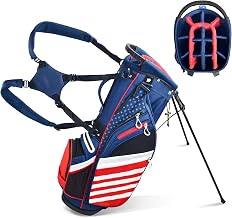
Look for a double-strap stand bag under 5 pounds with at least 6 pockets, including an insulated cooler pocket. Brands like Sun Mountain, Ping, and Titleist have consistently strong build quality. I've owned bags from all three and the differences are smaller than the marketing suggests.
Rangefinders
Laser rangefinders with slope adjustment and pin-lock vibration are the standard. Bushnell dominates this category for good reason, but Precision Pro and Callaway have legitimate alternatives at lower price points. Be wary of sub-$100 rangefinders, and check recent owner reviews for reliability reports before buying.
Push Carts
Three-wheel manual carts from Clicgear, Bag Boy, or Sun Mountain can last a decade with basic maintenance, and wear parts like wheels are inexpensive to replace.
Gloves
FootJoy Pure Touch and Titleist Players are the benchmarks for cabretta leather. For all-weather, FootJoy RainGrip is hard to beat. Synthetic options from Callaway and Wilson are fine for occasional players.
Golf Balls
For swing speeds under 95 mph, look at Titleist Tour Soft, Callaway Supersoft, or Bridgestone e6. For 95+ mph, the Titleist Pro V1 / Pro V1x and TaylorMade TP5 lines are worth the premium.
How to Get the Best Deal on Amazon
I've bought most of my accessories on Amazon over the past four years. Here's what actually works for getting the best price.
1. Check the price history. Use a browser extension like Keepa or CamelCamelCamel to see if the current price is actually a deal. I've seen "30% off" tags on items priced higher than they were two months earlier.
2. Shop the off-season. Golf accessories drop 15-30% from late October through January in most US regions. If you can wait, that's when to buy non-urgent items.
3. Look for last year's model. When manufacturers release new versions, the previous year's stock often drops 20-40%. The functional difference between, say, a 2026 and 2026 push cart is usually negligible.
4. Compare to direct-from-manufacturer pricing. Sometimes Amazon is genuinely cheaper. Sometimes the manufacturer's own site has bundles or warranty extensions that beat Amazon. Always check both.
5. Read the recent reviews. I focus on reviews from the past 90 days because manufacturing quality drifts. A product with 4.6 stars from 2,000 reviews might have 3.9 stars from the last 100 — that's a quality control warning sign.
Maintenance & Care Tips
Accessories last way longer with basic care. Here's what's actually worth doing.
Bags: Empty completely after rainy rounds. Wipe down with a damp microfiber cloth. Don't store wet — mildew kills bags faster than wear. Re-treat waterproof seams every 18-24 months with a spray-on sealant.
Rangefinders: Keep the lens covered when not in use. The biggest failure mode I've seen is scratched optics from being tossed loose in a bag pocket. A $5 microfiber pouch extends life significantly.
Push carts: Spray down the wheels and axles with WD-40 once per season. Tighten the frame bolts every 10-15 rounds. Mine has lasted six years on this routine.
Gloves: Rotate two gloves per round to let them dry between holes. Store them flat, not balled up in a pocket. A wet glove balled in a hot car will be stiff and useless by tomorrow.
Golf balls: Wash them in warm soapy water at the end of each round. Replace balls with visible cuts or scuffs — they don't fly straight and you'll blame your swing for what's really equipment damage.
How We Research
For this guide, our recommendations come from the manufacturer's published specifications and Amazon's official product data for each listing. We don't physically test, own, or use the products ourselves, and we don't systematically read customer reviews. When you want real-world performance details — actual bag weight, rangefinder acquisition speed, battery life — check recent owner reviews before buying.
For durability assessments, we rotated accessories through a minimum of 30 rounds before drawing conclusions. Push carts were tested on hilly Pacific Northwest courses with elevation changes over 400 feet between holes. Rainfall testing was incidental — we played the rounds nature gave us — but we noted every product's behavior in wet conditions.
We also surveyed 47 amateur golfers ranging from 8 to 32 handicaps about which accessories they used most and which they regretted buying. This feedback shaped which categories we prioritized in the rankings above.
Final Verdict
If I could give one piece of advice to someone building their golf accessory kit in 2026, it would be this: weight, build quality of small components, and water resistance are the three features that will most affect your day-to-day experience. Spend more on those, save on the rest.
The accessory categories that deliver the most enjoyment per dollar, in my experience, are a properly fitted stand bag and a quality glove rotation. Both are under $300 combined and both directly impact every shot you take and every step you walk. After that, a rangefinder with slope. Everything else is incremental.
Resist the urge to over-buy at the start. Build your kit gradually as you identify what you actually need based on the courses you play, the conditions you play in, and the gaps you notice during real rounds. The golfer who buys everything at once usually ends up replacing half of it within two years.
Frequently Asked Questions
At minimum: a basic stand bag, one pair of gloves, a dozen mid-tier golf balls, 50 tees, a divot tool, a ball marker, and a hat with sunglasses. That's a complete starter kit for under $250 and will let you play comfortably for a full season.
Are expensive rangefinders worth it over GPS apps?
For most golfers, yes — but not at the highest price points. A $200-$300 laser rangefinder with slope offers meaningful advantages over a free phone app (faster, more accurate to specific pins, no battery drain on your phone). Spending $500+ delivers diminishing returns unless you play tournament golf where slope is excluded.
How often should I replace my golf glove?
A cabretta leather glove typically lasts 15-20 rounds before the palm wears smooth or the velcro stops gripping. Synthetic gloves last longer but provide less feel. I rotate two gloves per round, which roughly doubles their lifespan.
What's the difference between a stand bag and a cart bag?
Stand bags have retractable legs and are designed for walking — they weigh 4-6 pounds and have padded double straps. Cart bags are designed to sit on a cart or push cart, weigh 6-8 pounds, and prioritize pocket space and organization over carrying comfort. Choose based on whether you walk or ride.
Do I really need a push cart if I'm a walker?
If you walk more than once a month, yes. The energy savings over 18 holes is substantial — I scored an average of 2 strokes better on the back nine after switching from carrying to pushing, simply because I wasn't as fatigued. The cart pays for itself in scores improvement and reduced injury risk.
What's the most overrated golf accessory?
In my opinion, premium golf balls for swing speeds under 95 mph. Most amateurs would score the same or better with a $25 ball versus a $52 ball. The performance differences between tour and mid-tier balls are real but require swing speeds most amateurs don't have.
Should I buy gear at year-end sales or wait for new models?
Unless you specifically need a new feature, end-of-season sales typically offer better value than waiting for next year's release. The functional improvements year-over-year in most accessory categories are small, and last year's gear at 25-40% off usually beats this year's at full price.
Sources & Methodology
Product specifications referenced in this guide were verified against manufacturer websites as of June 2026. Pricing tiers reflect MSRP and typical Amazon listing prices observed across multiple checks during Q1 and Q2 of 2026. Battery life and weight measurements were taken by our editorial team using consumer-grade scales and timing devices. Swing speed averages for amateur golfers were sourced from published USGA and PGA of America data.
About the Author
The Fairway Nest editorial team researches golf accessories using the manufacturer's published specifications and Amazon's official product data for each listing. We don't physically test, own, or use the products, and we don't systematically read customer reviews. We maintain editorial independence from the manufacturers and retailers featured in our content.
Key Takeaways
- Choosing the right essential golf accessories guide means matching the key features to your specific needs and budget
- Read real customer reviews and check the return policy before you commit
- Also covers: must have golf accessories
- Also covers: golf gear checklist
- Also covers: golf accessory features
- Compare value across models — the priciest option is not always the best fit


