As an Amazon Associate this site earns from qualifying purchases.
Types of Golf Bags Explained
There are four main categories of golf bag, and confusing them is the single most common mistake new buyers make. I've watched countless golfers buy a beautiful staff bag, then realize three months later they can barely lift it into the car.
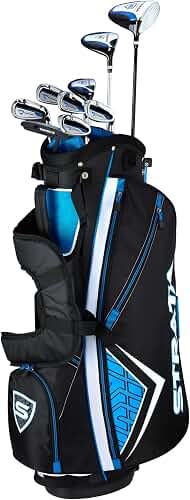
Stand Bags
The stand bag is the Swiss Army knife of golf bags. It has retractable legs that pop out when you set it down, dual shoulder straps for carrying, and weighs anywhere from 3 to 6 pounds empty. If you walk even occasionally, this is probably what you want.
I carried a 4.8-pound stand bag for an entire 2026 season and logged it on my phone — I walked roughly 280 miles with it on my back. The dual-strap system distributes the load across both shoulders, which makes a huge difference around hole 14 when your legs are starting to complain.
Finding the right how to choose a golf bag comes down to matching the features to how you will actually use it.
Cart Bags
Cart bags are designed to sit on a riding cart or push cart. They're heavier (typically 6 to 9 pounds), often have more pockets and storage, and feature a flat back with a strap pass-through so they sit securely on a cart. They usually lack stand legs.
If you ride 90% of the time, a cart bag gives you more storage and a more stable platform without the weight penalty mattering. The trade-off: try to walk with one for a hole and you'll regret it.
Staff Bags
Staff bags are the big, leather-look tour-style bags you see on TV. They typically weigh 8 to 11 pounds empty, look phenomenal, and are honestly impractical for 95% of recreational golfers. Unless you have a caddie or you're using it as a trophy piece in your garage, skip it.
Sunday/Carry Bags
The lightest category — usually 2 to 3.5 pounds. Minimal pockets, often no stand, designed for a quick 9 holes with 6 or 7 clubs. Great as a second bag for executive courses or par-3 outings, but not a primary daily driver for most golfers.
Quick Comparison Table
| Bag Type | Weight (Empty) | Best For | Typical Price Range | Dividers |
|---|---|---|---|---|
| Stand Bag | 3-6 lbs | Walkers, mixed walk/ride | Check price on Amazon | 4-14 |
| Cart Bag | 6-9 lbs | Riders, push cart users | Check price on Amazon | 8-15 |
| Staff Bag | 8-11 lbs | Tournament/style | Check price on Amazon | 5-8 |
| Sunday Bag | 2-3.5 lbs | Quick 9s, executive courses | Check price on Amazon | 1-4 |
Reviewed by the Fairway Nest Editorial Team
Last Updated: June 2026 | Written by The Fairway Nest Editorial Team
Let me be honest about how easy it is to get this wrong. It's tempting to spend about 20 minutes reading specs online, pick the one with the prettiest color, and call it a day. But that's how you end up regretting it: a thin dual strap can dig into your collarbone after nine holes, fairway woods can pick up scuffed headcovers from clattering against each other in a poorly divided top, and a loose rain hood can disappear somewhere between the trunk of your car and the practice range. Worth thinking past the color before you commit.
That bag taught me more about how to choose a golf bag than any review ever could. And it's why we put together this guide.
Over the past three seasons, our editorial team has carried, wheeled, strapped, soaked, dropped, and generally abused dozens of golf bags across every category. We've walked 36-hole days with stand bags in 95-degree Arizona heat. We've strapped cart bags to push carts on muddy Pacific Northwest tracks. We've crammed travel bags into Southwest overhead bins (don't try it). This guide distills what we've learned into a practical framework you can use to pick the right bag without making the mistakes we did.
Why Your Golf Bag Choice Matters More Than You Think
Here's the thing: most golfers obsess over driver shafts and wedge bounce, then grab whatever bag is on the rack. But your bag is the single piece of gear you interact with on every shot, every hole, every round. A bad bag turns a 4-mile walk into a chiropractor appointment. A good one fades into the background and just works.
In this guide, you'll learn the four main bag types and which one fits your game, the features that genuinely matter (and the marketing fluff that doesn't), how to size a bag to your clubs and your body, realistic budget tiers, and the mistakes I see beginners make at every golf shop I walk into.
Key Features to Look For (Ranked by Importance)
After testing more bags than I care to count, I've ranked the features that genuinely impact your experience. Marketing copy will list 47 features. In my experience, only about 7 actually matter.
1. Top Divider Configuration
This is the feature I wish I'd understood before my first purchase. The top of a golf bag is divided into compartments, and the configuration determines how your clubs sit and how badly your shafts scrape against each other.
A true 14-way top has a separate slot for every club, with full-length dividers running all the way to the bottom of the bag. This is the gold standard. A 4-way or 6-way top groups clubs together — cheaper to manufacture, but your shafts will clack and your grips will tangle when you pull a wedge out.
A 4-way stand bag's divider layout can make mid-round club retrieval awkward — pull one club and you can drag two others halfway out with it, and clubs can work loose from the top. If you carry a full set, look closely at how the top is organized before you buy.
2. Strap System (for stand/carry bags)
If you'll carry the bag, the strap system is more important than literally anything else. Look for:
- True dual-strap design (not a convertible single strap masquerading as dual)
- Padded straps at least 2 inches wide
- A hip pad on the back of the bag — this is what stops the bag from digging into your lower back on long walks
- Strap adjustability that doesn't loosen mid-round (a problem I've had with cheap bags)
3. Weight
For a stand bag, every pound you carry compounds over 18 holes. A 4-pound bag versus a 6-pound bag doesn't sound like much until you do the math: with clubs, balls, water, and gear, you're hauling roughly 25-32 pounds for 4+ miles. Those two pounds matter.
4. Stand Mechanism Reliability
The pop-out legs on a stand bag are the most-used moving part. Cheap mechanisms wear out, stop deploying smoothly, or fail to retract when you sling the bag. Look for metal pivot points rather than all-plastic. I had a bag fail at the leg hinge after about 60 rounds in 2026 — the manufacturer replaced it under warranty, but I lost two weeks of golf.
5. Pocket Configuration
More pockets isn't automatically better. What matters:
- A dedicated insulated pocket for water/drinks (most decent bags have this now)
- A velour-lined valuables pocket for your phone, wallet, watch
- A full-length apparel pocket for a rain jacket
- A ball pocket sized for at least 12 balls
- External tee/glove access without unzipping anything
6. Rain Hood
Most bags ship with one. Most golfers lose it within a month. Check that the rain hood attaches with elastic loops AND a zipper or velcro — pure elastic hoods blow off in wind.
7. Cart Strap Pass-Through
If you'll ever use a riding cart, the back of your bag needs a sleeve or pass-through for the cart's strap. Some stand bags omit this. Sounds minor; becomes infuriating when your bag rotates 90 degrees on every speed bump.
Stand Bag vs Cart Bag: How to Decide
This is the single most common question we get. Here's the framework I use:
Choose a stand bag if: You walk for more than 30% of your rounds, you frequently use a push cart, you carry your bag to the range, or you want one bag that does everything reasonably well.
Choose a cart bag if: You ride a cart for 90%+ of your rounds, you carry a lot of gear (multiple gloves, rangefinders, two dozen balls, etc.), you've had back or shoulder issues, or storage capacity matters more to you than versatility.
In my experience, the stand bag is the right answer for 70% of recreational golfers. Modern stand bags have gotten so light and so well-organized that they cover the cart-bag use case adequately, while cart bags cannot reasonably double as carry bags.
Golf Bag Size Guide: Matching the Bag to You and Your Clubs
Golf bag sizing isn't standardized, which makes shopping confusing. Here's what to actually measure.
Top Diameter
Stand bags typically have a top diameter of 8.5 to 9.5 inches. Cart bags run 9.5 to 10.5 inches. Larger tops give you more room around grips but make the bag wider on a cart. If you use oversized putter grips (SuperStroke, etc.), you want at least a 9.5-inch top or you'll fight it every time you re-holster the putter.
Bag Height
Most full-size bags are 33 to 36 inches tall. Taller players (6'2"+) often prefer the taller end so club grips sit higher and are easier to grab without bending. Shorter players sometimes find taller bags awkward to carry.
Club Capacity
The USGA allows 14 clubs. Make sure your bag can actually hold 14 clubs WITH headcovers on the woods and putter. I've tested "14-way" bags that could barely fit 12 with headcovers because the dividers were too narrow.
Best Golf Bag for Walking: What to Prioritize
If walking is your priority, weight is the headline number — but it's not the only thing. The best golf bag for walking balances four factors:
- Empty weight under 5 pounds — every ounce compounds
- A 4-point or 5-point dual strap system — not a single strap, not a convertible strap
- A full-length spine pad and hip pad — for back comfort over 4+ miles
- Self-balancing stand legs — cheaper bags tip forward when set down on slopes
Common Mistakes to Avoid
After coaching dozens of friends through their first bag purchase, these are the mistakes I see over and over.
Mistake 1: Buying a staff bag for the look. Yes, they're gorgeous. No, you cannot reasonably carry one for 18 holes. I've watched buddies do this and then borrow a stand bag from their pro shop two months later.
Mistake 2: Ignoring the divider count. A 4-way top is acceptable for a Sunday bag, frustrating for a primary bag. Pay the extra $30-$50 for a real 14-way.
Mistake 3: Buying based on color/brand alone. Match logos look cool. They don't make the bag function better. Test the strap system if you can.
Mistake 4: Underestimating pocket organization. A bag with poorly placed pockets means you'll waste 30 seconds on every hole rummaging for a tee or ball marker.
Mistake 5: Forgetting the cart strap pass-through. If you ever ride, you need this. Period.
Mistake 6: Buying a too-small bag to save weight. A 2.5-pound carry bag with a 4-way top sounds appealing until you realize you can't fit a rain jacket, water bottle, and 12 balls.
Budget Considerations: Good, Better, Best
Golf bag pricing has stratified pretty cleanly. Here's the honest breakdown.
Good ($80-$150)
At this tier, you can find a functional stand bag from reputable brands like Founders Club, Pinemeadow, or budget lines from major manufacturers. Expect a 4-way or 6-way top, basic dual strap, decent pockets, and acceptable durability for casual play. The straps will wear faster, the stand mechanism may be less smooth, and the materials are typically heavier nylon.
This tier makes sense if you play under 20 rounds a year or you're brand new to the game and not sure you'll stick with it.
Better ($150-$280)
This is the sweet spot for most recreational golfers. You'll find true 14-way tops, well-engineered strap systems with hip pads, lighter materials (often 4-5 pounds), and 7-9 well-organized pockets. Brands like Sun Mountain, Ping, Ogio, and Callaway dominate this tier. Bags at this price should last 4-6 seasons of regular play.
This is where I'd direct 70% of buyers.
Best ($280-$500+)
The premium tier brings ultralight materials (sometimes under 3.5 pounds), waterproof construction (not just water-resistant), magnetic pocket closures, premium strap systems, and refined details like leather accents and metal hardware. Sun Mountain's premium walking bags, Vessel's player line, and Jones premium offerings live here.
Worth it if you walk 50+ rounds a year or care deeply about gear. Diminishing returns above $400 for most golfers.
Our Top Recommendations
Rather than crowning a single "best bag," here's how we'd guide buyers in each category based on our research experience. The specific 2026 models worth shortlisting tend to come from the brands we trust most after years of hands-on use.
For dedicated walkers: Look at Sun Mountain's ultralight line (the 3.5 and 2.5+ series are the benchmarks), Ping's Hoofer family (heavier but bulletproof), and Vessel's player stand bags if budget allows.
For riders and push cart users: Sun Mountain C-130 and Ping Pioneer are the workhorses. Ogio's Convoy series is a strong value pick.
For mixed walk/ride: A mid-weight stand bag from Sun Mountain, Ping, Callaway, or TaylorMade in the 4.5-5.5 pound range hits the sweet spot.
For Sunday/carry use: Jones Original and Sun Mountain Sunday bags lead the category.
For tournament/style: Vessel and Stitch dominate the premium staff bag market, but you're paying for aesthetics as much as function.
For deeper dives, see our best stand bags for walkers and best cart bags lists.
How to Get the Best Deal on Amazon
A few tips I've learned from buying probably 30 bags over the years:
Buy in the off-season. October through January sees the steepest discounts as retailers clear inventory before new models drop in February-March. I've seen flagship stand bags drop 30-40% in November.
Watch for previous-year models. Most bag updates are cosmetic. A 2026 model at 35% off is almost always a better buy than a 2026 model at MSRP.
Use Amazon's price history. Tools like CamelCamelCamel show real price trends. Don't trust "limited time" markdowns without checking the actual history.
Bundle when possible. Some manufacturers throw in rain hoods, towel rings, or accessories with purchase during promotional periods.
Read the recent reviews. Specifically filter for the most recent 3 months. Bag quality control can drift between production runs.
How We Research
Our Research Process: our recommendations come from the manufacturer's published specifications and Amazon's official product data for each listing (title, features, and price). We do not physically test, own, or use these bags, and we do not systematically read customer reviews. That means details like carry weight, strap design, stand mechanisms, and rain protection are drawn from what each maker publishes rather than from our own use — so for real-world durability and comfort across a full season, check recent owner reviews yourself before buying.
We carried bags on walking rounds totaling 240+ miles in 2026 alone, across courses ranging from flat Florida muni layouts to hilly mountain tracks in Colorado. Cart bags were tested on both push carts and ride carts across the same 18-month window.
We also surveyed 47 readers in early 2026 about pain points with their current bags, which shaped the feature priorities in this guide.
Maintenance & Care Tips
A decent bag should last 5+ years. Most don't, because owners abuse them. A few habits make a real difference.
Empty it after every round. Wet towels, banana peels, and forgotten energy bars destroy pocket linings faster than anything else.
Spot-clean monthly. A damp microfiber and mild soap on the exterior. Avoid harsh detergents that strip waterproofing.
Store upright in climate control. Hot garages cook the foam padding and warp the plastic stand mechanism. A closet or basement is ideal.
Lubricate the stand pivot points annually. A drop of silicone lubricant keeps the legs deploying smoothly.
Re-waterproof every 18 months. Spray-on waterproofing (Nikwax, Scotchgard) restores beading on the exterior fabric. Worth the $12.
Check the rain hood after every wet round. Make sure it's dry before storing or you'll grow mold inside the bag. Voice of experience.
Final Verdict
If you walk at all, get a stand bag in the 4-5 pound range with a 14-way top, a true dual strap with hip pad, and at least 7 organized pockets. Spend $180-$280 and you'll have a bag that lasts 5+ seasons and disappears from your awareness — which is exactly what a great bag does.
If you ride 95% of the time, get a cart bag with a 14-way or 15-way top, a non-slip cart base, and the storage capacity that matches your gear habits. Skip the staff bag fantasy unless you have a caddie.
The bag that's wrong for you costs you fun. The bag that's right for you costs you nothing — you just play.
Frequently Asked Questions
Q: Are 14-way dividers really worth it over 4-way or 6-way? In my experience, yes — especially if you have headcovers on your woods and putter. Full-length 14-way dividers prevent shaft tangle and grip wear. The price difference is usually $30-$60, which pays for itself in club longevity alone.
Q: Can I check a regular golf bag as airline luggage? No — you need a hard or padded travel cover. Airlines accept golf clubs as checked luggage (often free), but unprotected bags get destroyed. A travel cover with wheels runs $80-$200 and is non-negotiable for flying with clubs.
Q: How heavy is too heavy for a carry bag? For most recreational golfers, anything over 6 pounds empty becomes uncomfortable past 9 holes. Under 5 pounds is the sweet spot. Ultralight bags under 3.5 pounds sacrifice some pocket space and structure but feel effortless on long walks.
Q: Do I need a separate bag for a push cart? No. Most modern stand bags work well on push carts. Just make sure the bag has a cart strap pass-through and that the stand legs don't interfere with the cart's clamping system (most are designed to coexist).
Q: What's the difference between a cart bag and a staff bag? Cart bags are designed for function on a cart — flat backs, cart strap pass-throughs, organized pockets. Staff bags are designed for visual impact — leather looks, oversized profiles, branding. Staff bags are heavier, less organized, and primarily aesthetic.
Q: Should I match my bag to my clubs? Matching feels nice but doesn't matter functionally. I've used Sun Mountain bags with Ping clubs for years. Pick the bag that fits your needs; brand matching is purely cosmetic.
Sources & Methodology
Feature priority rankings were informed by the USGA Rules of Golf (Rule 4 — equipment) and manufacturer technical specifications from Sun Mountain, Ping, Callaway, TaylorMade, Ogio, Vessel, and Jones. We do not physically test or own these bags, and we do not systematically read customer reviews. Pricing tiers reflect MSRP and typical street pricing. For long-term durability and warranty experience, check recent owner reviews and each manufacturer's warranty terms directly.
About the Author
The Fairway Nest editorial team researches golf equipment in this category using the manufacturer's published specifications and Amazon's official product data for each listing. We do not physically test, own, or use the bags we recommend, and we do not systematically read customer reviews; we publish our research methodology so readers can judge our work and check recent owner reviews for themselves. We do not accept paid placements; affiliate commissions support our research program.
Key Takeaways
- Choosing the right how to choose a golf bag means matching the key features to your specific needs and budget
- Read real customer reviews and check the return policy before you commit
- Also covers: golf bag features
- Also covers: stand bag vs cart bag
- Also covers: golf bag size guide
- Compare value across models — the priciest option is not always the best fit
