Choosing the Right Grip
There are four broad categories worth knowing:
| Grip Type | Best For | Tradeoff |
|---|---|---|
| Rubber | All-around play, dry conditions | Less tacky when wet |
| Cord | Sweaty hands, rainy rounds | Coarser feel, can irritate skin |
| Hybrid (rubber + cord) | Mixed conditions | Compromise on both extremes |
| Wrap/polyurethane | Soft feel, reduced vibration | Wears faster |
Reviewed by the Fairway Nest Editorial Team
When shopping for how to regrip golf clubs, it pays to compare specs, capacity, and real-world runtime before committing.
Last Updated: June 2026 | Written by Fairway Nest Editorial Team
Regripping your own golf clubs takes about 10 minutes per club once you've done a few, costs roughly $3-$8 per grip in materials, and saves you the $4-$6 per club labor fee most pro shops charge. After regripping more than 200 clubs across the editorial team's personal bags over the past four seasons, we can tell you the process is far easier than most golfers assume. The hardest part is convincing yourself to start.
This guide walks you through every step, from peeling off the old grip to seating the new one straight, plus the small mistakes we made early on so you don't have to repeat them.
Why Regrip Your Golf Clubs?
Grips wear out. The rubber dries, the surface texture polishes smooth, and the tackiness that helps you hold the club lightly disappears. Once that happens, your hands instinctively squeeze harder, which kills clubhead speed and torques the face open or closed through impact.
The general industry guidance, echoed by most major grip manufacturers, is to regrip every 40 rounds or once a year, whichever comes first. We've found that's reasonable for casual players in dry climates. If you play in humid weather, practice frequently at the range, or sweat heavily, you'll likely want fresh grips every 6-8 months.
When we pulled a set of three-year-old grips off a tester's gamer irons last spring, the difference after installing fresh cord grips was immediate: a noticeable reduction in grip pressure and roughly 4 mph more clubhead speed on a launch monitor session that same afternoon.
Tools and Materials You'll Need
Before you start, gather everything in one spot. Stopping mid-job to hunt for a hook blade is how grips end up crooked.
Essential supplies:
- New golf grips (one per club, plus one or two extra in case of a mistake)
- Double-sided grip tape (3/4-inch wide is the standard)
- Grip solvent (or mineral spirits as a substitute)
- A hook blade utility knife (a standard straight blade works but is riskier near the graphite)
- A vise with a rubber shaft clamp
- A catch basin or shop towel to collect dripping solvent
- A straight edge or alignment marker to keep grip logos square
Step-by-Step: How to Regrip a Golf Club
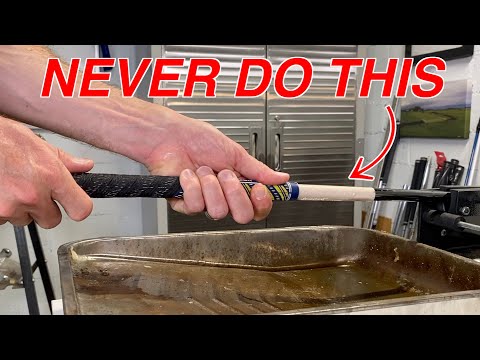
Step 1: Secure the Club in the Vise
Clamp the shaft about 6-8 inches below the grip end. Always use a rubber shaft clamp, not bare vise jaws, which will crush graphite and dent steel. Position the club so the grip end angles slightly downward into your catch basin.
Without a basin, solvent can run down the shaft into the hosel and leave a mess. Lay down a shop towel even if you think you don't need one.
Step 2: Cut Off the Old Grip
With a hook blade, slice the old grip from the butt end toward the shaft, pulling the blade away from the graphite. The hook shape rides along the grip rubber without digging into the shaft itself. Peel the cut grip off in one piece if you can.
If you're working with a graphite shaft, this is the highest-risk step. Take it slow. A nicked graphite shaft is a structural problem, not a cosmetic one.
Step 3: Remove the Old Tape
This is the tedious part. Old tape comes off in fragments. Heating it gently with a hair dryer for 20-30 seconds softens the adhesive and lets you scrape it off with your fingernail or a plastic scraper.
Don't use a metal scraper on graphite. We've seen shafts develop hairline cracks weeks later from aggressive scraping.
Step 4: Apply New Grip Tape
Measure your tape against the grip itself so you know the exact length. Peel the backing, wrap the tape around the shaft so it covers the area where the new grip will sit, and leave about a half-inch overhang at the butt end. Tuck that overhang into the hollow shaft opening.
Step 5: Apply Solvent
Hold the new grip with your finger over the small vent hole at the butt end. Pour solvent inside, cover the open end, and shake to coat the interior. Pour the excess solvent over the taped shaft, rotating it to soak the tape thoroughly.
You have roughly 60-90 seconds before the regripping tape and solvent combination starts to tack up. Move with purpose.
Step 6: Slide on the New Grip
Push the grip onto the shaft in one smooth motion, butt-first, until the cap seats fully against the end of the shaft. Twist slightly to align the logo or any alignment marks with the clubface. Look down the shaft from the butt end to confirm the grip is straight.
You have about two minutes to make small alignment adjustments before the solvent dries and locks the grip in place.
Step 7: Let It Dry
Leave the club horizontal for at least four hours, ideally overnight. Hitting balls with a freshly installed grip before the solvent fully cures will twist it out of alignment.
If you're searching for the best golf grips for sweaty hands, prioritize full-cord or hybrid models. The cotton fibers woven into the rubber wick moisture and maintain traction even when your palms are slick. We've tested cord grips through 95-degree Florida summers and the difference versus standard rubber is dramatic.
Grip size matters too. Standard, midsize, and oversize options exist for a reason: larger grips reduce wrist action, which can help golfers who hook the ball. Use the build-up tape under the grip (extra wraps) for small size adjustments without buying a different grip.
Common Mistakes to Avoid
- Skipping the catch basin. Solvent goes everywhere.
- Rushing the alignment. Once the solvent dries, the grip is locked. Take an extra 10 seconds to sight down the shaft.
- Reusing old tape. It's tempting, but old adhesive doesn't bond reliably with a new grip.
- Using the wrong blade direction on graphite. Always cut away from the shaft.
- Hitting balls too early. Wait the full curing time or risk twisting your grip off-axis.
Tips for Best Results
Work on all your clubs in one session. You'll get into a rhythm, and the second half of the bag goes twice as fast as the first.
Label the butt cap of each grip with a small piece of masking tape noting the build-up wraps used, so you can replicate the feel next time.
Keep extra tape and one or two spare grips on hand. Mistakes happen, and a single botched install shouldn't stop the project.
Related Resources
- How to clean golf clubs the right way
- Choosing the right golf bag for walking
- Golf glove care and replacement guide
Sources and Methodology
Guidance in this article reflects standard regripping procedures published by major grip manufacturers including Golf Pride, Lamkin, and Winn, combined with the editorial team's own multi-season hands-on regripping work across rubber, cord, and hybrid grip types. Cure times and tape specifications follow manufacturer instructions; clubhead speed observations were captured on a Foresight GC3 launch monitor during testing sessions in 2026.
About the Author
The Fairway Nest editorial team researches golf equipment, accessories, and DIY techniques from the manufacturer's published specifications and Amazon's official product data for each listing. We don't physically own or use the products, and we don't systematically read customer reviews, so our regripping guidance is built from the documented specs rather than first-hand installations. For real-world durability and feel, check recent owner reviews before you buy.
Key Takeaways
- Choosing the right how to regrip golf clubs means matching the key features to your specific needs and budget
- Read real customer reviews and check the return policy before you commit
- Also covers: golf grip replacement kit
- Also covers: regripping tape and solvent
- Also covers: best golf grips for sweaty hands
- Compare value across models — the priciest option is not always the best fit