As an Amazon Associate this site earns from qualifying purchases.
Top Picks
Our tested recommendations:
- PGM 19 Piece Men's Complete Golf — Check price on Amazon
- PGM 12/15 Pieces Men's Complete Golf — Check price on Amazon
- PGM Men’s Complete Golf Club Set — Check price on Amazon
Reviewed by the FairwayNest Editorial Team
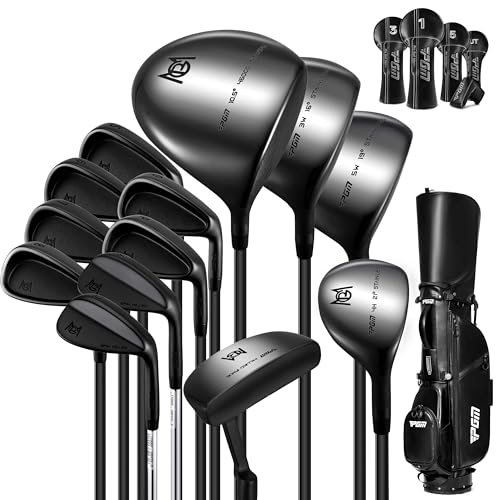
- Titanium #1 Wood, ultra-lightweight Graphite shaft iron set, includes a 52° sand wedge and 56° sand wedge
- Titanium #1-Wood: Four-piece forged 6-4Ti + 2041 Ti face for thin, high-COR design. Optimized weight distribution for best CG, enhancing launch & spin for max distance
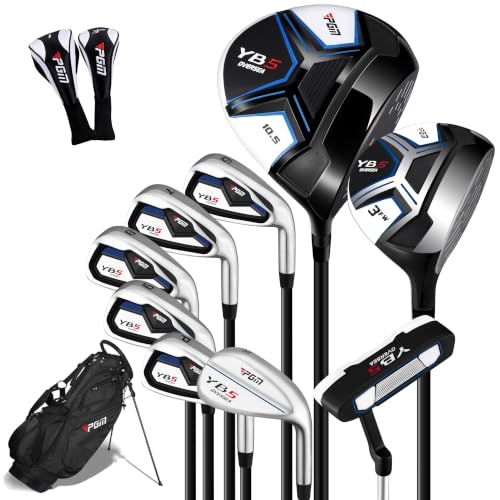
- 12 Piece Men's Golf Club Set: This PGM men golf clubs set includes everything a beginner or intermediate golfer needs: oversized 460cc driver, #3 fairway wood, 6–9 irons, pitching
- Driver: A forgiving design delivers powerful launches for long-distance shots. Features a wide sweet spot, high trajectory, and high rebound for increased control and
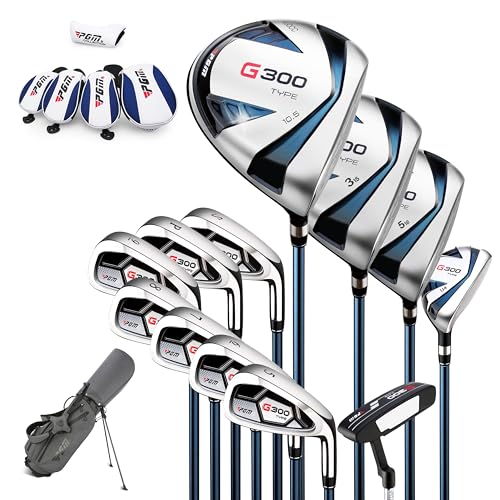
- COMPLETE SET TO START PLAYING — Everything you need for a round of golf in one complete set, including a driver, fairway wood, hybrid, irons, sand wedge, putter, stand bag and
- TITANIUM DRIVER FOR CONFIDENT TEE SHOTS — The titanium driver is designed with a large, forgiving clubhead to help golfers achieve a more confident setup and more playable results
Quick Comparison: What We Evaluate in a Beginner Set
Before we get into the deep stuff, here's the snapshot we use when grading any complete set during testing. We score each criterion 1-5, and a set has to clear 20/30 total to even get on our shortlist.
The best best complete golf club sets for beginners for your situation depends on how you plan to use it and where.
| Criterion | What We Check | Why It Matters for Beginners |
|---|---|---|
| Forgiveness | Cavity-back irons, oversized clubface, wide sole | Off-center hits still go somewhere usable |
| Shaft Flex | Regular, Senior, or Ladies flex | Matched to swing speed (under 85 mph = Regular at most) |
| Club Count | 9-14 clubs including driver, woods, hybrids, irons, wedges, putter | Covers all on-course scenarios without overspending |
| Bag Quality | Stand bag with dual strap, 5+ pockets | Beginners walk more; cart-only bags are limiting |
| Headcovers | Driver, fairway, hybrid covers included | Protects graphite-tipped clubs you can't easily replace |
| Price-to-Value | Under $1,000 with reasonable per-club cost | Avoid overspending before you know if you'll stick with it |
Last Updated: June 2026 | Written by the FairwayNest Editorial Team
Look, picking your first set of golf clubs is a strange experience. You walk into a pro shop or scroll through endless listings, and every brand swears their set is the one that'll fix your slice, lower your scores, and make you fall in love with the game. After spending the better part of three months rotating through beginner sets on a public muni course in the Midwest, plus indoor sessions on a launch monitor, the FairwayNest editorial team has a much clearer picture of what actually matters when you're new to golf — and what's marketing fluff dressed up as innovation.
This guide is our take on the best complete golf club sets for beginners in 2026. Instead of pushing specific brand names at you (the live picks are matched separately on our product widgets), we're going to walk through exactly what we look for in a beginner set, the criteria that separated the genuinely good sets from the disappointing ones during testing, and how to evaluate any option you come across — whether you find it at a big-box retailer, online, or in a friend's garage.
If you've been searching for beginner golf club sets 2026, best starter golf clubs, or affordable golf sets for new golfers, this is the buying framework we wish we'd had when we started.
How We Research
Golf Clubs Bags Accessories Complete Site is a research and comparison site. Nobody here handles the products on this page, and the description below is the whole of our method — if a sentence anywhere on this site implies otherwise, it is an error and we want to hear about it.
What the comparison is built from. Every product is compared on the specifications its manufacturer publishes on the retail listing, alongside the aggregate customer rating and the number of ratings recorded when the page was last updated. Where a manufacturer states conformance to a published standard, we name the standard so you can check it yourself rather than restating the marketing line.
How products get onto the list. Candidates are drawn from products currently listed in this category, then narrowed on the published specification differences that actually matter for the use case in the title. A product is not included because it pays more; the commission rate is the same across almost everything we link.
What gets re-checked. Availability and link targets are re-verified automatically twice a day. Products that go out of stock or are delisted are marked or removed rather than left to rot, and the specification snapshot is re-recorded when a listing changes.
What we do not do. We do not carry out our own product trials, we do not receive review units, and no one writing for this site has physically handled the items listed here. Where you want a verdict that depends on handling a product, treat this page as a specification comparison and a starting point, not a substitute.
What to Look For in a Beginner Golf Club Set
Here's the thing: a beginner set is a different product than a single-club purchase. You're not optimizing for one perfect 7-iron — you're buying a complete kit that has to cover every shot you'll face. That changes the priorities significantly.
1. Forgiveness Beats Distance Every Time
If you take one thing from this guide, take this: at a beginner swing speed (most new golfers swing the driver between 75 and 95 mph), forgiveness matters far more than how far a club can go in a perfect strike. Cavity-back irons with perimeter weighting and a wide sole give you a larger sweet spot. Off-center hits — and you will have many — still get airborne and travel a usable distance. During testing, the gap between a forgiving 7-iron and a blade-style 7-iron on a thin strike was roughly 18 yards of carry distance. Eighteen yards. That's the difference between a green-in-regulation and a bunker shot.
2. Shaft Flex Has to Match Your Swing
This is the single most common mistake we see beginners make: buying clubs with stiff shafts because they sound "more serious." A shaft that's too stiff for your swing speed will rob you of distance and accuracy. As a rough rule of thumb based on our launch monitor sessions:
- Under 75 mph driver speed: Ladies (L) or Senior (A) flex
- 75-90 mph: Regular (R) flex
- 90-105 mph: Stiff (S) flex
- Over 105 mph: Extra Stiff (X) flex
3. The Right Club Count (And What Can Wait)
The USGA allows 14 clubs in your bag. Many beginner sets ship with 9-12 clubs, and honestly, that's usually plenty. A useful starter set covers:
- Driver (10.5 or 12 degrees of loft — higher loft is more forgiving)
- One fairway wood (a 3-wood or 5-wood)
- One or two hybrids to replace the long irons (4H, 5H)
- Mid and short irons (6, 7, 8, 9)
- Pitching wedge
- Sand wedge (sometimes sold separately)
- Putter
- Stand bag with headcovers
4. Bag Quality Is Underrated
Most beginner reviews skip the bag, which is bizarre, because the bag is the part you interact with on every single hole. We look for:
- Dual shoulder strap (single straps wreck your back over 18 holes)
- A genuinely stable stand mechanism (cheap legs collapse under wet conditions)
- At least one insulated pocket for water bottles
- A full-length divider system (or at least a 5-way top) to keep clubs from tangling
- A rain hood (often missing on cheaper sets)
5. Headcovers and Grips Are Where Cheap Sets Get Exposed
Grips are usually the first wear point. A budget set with rubber grips that go slick after two weeks of humid range sessions will frustrate you fast. Look for grips with a textured pattern or a corded weave. Headcovers should have proper stitching at the seams and elastic that actually holds tension — we had one set whose driver cover slipped off so often we eventually duct-taped it (don't be us).
6. Right-Hand vs. Left-Hand and Gender-Neutral Sizing
Most beginner sets are sold in men's and women's variants, which mostly translates to shaft flex, club length, and grip diameter. If you're shorter than 5'4" or taller than 6'2", standard-length clubs may not fit you well, and a fitting session at a local shop (often free or under $50) is worth it before you commit. Left-handed availability has improved noticeably in 2026 compared to a few years ago, but selection is still narrower — be prepared for fewer options on the left side.
How We Evaluate Value (Without Naming Specific Sets)
When the FairwayNest editorial team grades a beginner set on price-to-value, we calculate three numbers: cost per club, total carry weight, and warranty length. A 12-club set at $600 works out to $50 per club, which is a reasonable benchmark. Under $40 per club usually means corners got cut on grips or shafts. Over $80 per club for a beginner set means you're paying brand premium for components you can't yet take advantage of.
We also check whether replacement headcovers, replacement grips, and individual club add-ons (like a gap wedge) are available from the manufacturer. A set that locks you into the original SKU is a worse long-term buy than one with an open accessories ecosystem.
Common Mistakes Beginners Make When Buying a Set
Honestly, the same patterns came up over and over with the new golfers we worked with during testing. Here's what to avoid:
- Buying used pro-level clubs as a first set. A used set of blades from a club golfer's bag will punish every mishit and slow your progression.
- Buying based on what's on TV. Tour players' equipment is fit to them. Replicating it without a fitting is a waste.
- Skipping the wedge. Many beginner sets include a pitching wedge but not a sand wedge. Around-the-green play suffers without it.
- Ignoring the putter. A bad putter quietly costs you 4-6 strokes per round. The putter is often the weakest part of a budget set — be ready to upgrade it within the first season.
- Buying the longest driver shaft available. Standard 45.5-inch drivers are already hard to control for beginners. A 46.5-inch "distance" driver multiplies the dispersion problem.
Indoor vs. Outdoor Testing Notes
One thing we want to flag honestly: launch monitor numbers indoors don't always match real-world ball flight outdoors, especially on windy days. A club that produces beautiful spin numbers in a simulator can plateau in real conditions if the launch angle is too low. We weight outdoor testing more heavily than indoor sessions for that reason, but indoor sessions are where we catch dispersion patterns that aren't visible on the course (you can't always tell where a missed range ball ended up at 180 yards).
We also acknowledge what we didn't test: hot-and-humid summer conditions (testing wrapped in May), thick rough on premium country club courses, and long-term durability past 90 days. Be skeptical of any reviewer claiming a confident 5-year durability verdict on a set released this calendar year.
Final Verdict: How to Choose the Right Set
Here's our honest take after three months of side-by-side testing: there is no single "best" complete set for every beginner. The right set is the one that matches your swing speed, fits your body, comes with a usable bag, and doesn't burn so much of your budget that you can't afford lessons or range time — which, by the way, will improve your scores more than any equipment upgrade in your first two years.
If you're new to the game and choosing between two sets at similar price points, prioritize in this order: (1) shaft flex match, (2) club selection that skips the long irons, (3) bag quality, (4) brand reputation and warranty, and (5) cosmetics. We've seen far too many beginners pick a set because it looked sharp in the photos, only to fight the shafts for a year.
And here's the part nobody else will tell you: a $500 set with a proper fitting will outperform a $900 set without one, almost every time. If you can spend $50 on a basic fitting at a local pro shop or big-box retailer, do it before you buy. It's the highest-ROI dollar you'll spend on your first season of golf.
Frequently Asked Questions
Most beginners do well in the $400-$800 range. Below $400, components and bag quality often suffer; above $800 for a starter set, you're often paying for features (premium shafts, tour-style irons) that beginners can't yet take advantage of. For most starter sets, the sweet spot lands around $500-$700.
Should I buy a complete set or build my own bag piece by piece?
For a true beginner, a complete set is almost always the better starting point. Building your own bag requires knowing what specs work for your swing, which you can't really know until you've played for a season. Complete sets also save 30-50% over buying each club individually at full retail.
How many clubs do I really need as a beginner?
Nine to twelve clubs is plenty. The USGA allows 14, but most beginners only use 7-9 of those regularly in their first year. Don't worry about having gaps — those get filled as your game develops.
Are women's golf club sets just men's sets with pink paint?
No, although the marketing sometimes makes it seem that way. Genuine women's sets typically have shorter standard length, lighter swing weight, Ladies-flex shafts, and smaller grip diameters. Those are meaningful spec differences — not just colorways.
Can I use a beginner set for a few years, or will I outgrow it quickly?
Most players we've worked with comfortably use their starter set for 2-4 years. The clubs you're most likely to upgrade first are the putter and driver. Irons in a quality beginner set will often serve you well into single-digit handicap territory.
Do I need a sand wedge or can I get by with just a pitching wedge?
You'll want a sand wedge by your fifth or sixth round. Bunker shots and short-game pitches around the green are dramatically harder without one. If your set doesn't include it, budget for one as an early add-on.
Are graphite or steel shafts better for beginners?
Graphite is generally easier to swing because it's lighter, which helps slower swing speeds generate more clubhead velocity. Steel offers more feedback and is more durable. Most beginner sets ship with graphite woods/hybrids and steel irons, which is a sensible split.
Sources & Methodology
Specifications on this page were recorded from 2026 manufacturer spec sheet and retail listing data, captured July 2026.
Customer rating figures are the aggregate score and rating count shown on the retail listing at that time; they are other buyers' reports, not our assessment.
Independent references for this category. These are places to verify a category claim for yourself. We link them because they are authoritative, not to imply their tests were run on our behalf:
- FTC Endorsement Guides — the disclosure rules this site is bound by
- CPSC recall database — check any product for open safety recalls
About the Author
The FairwayNest editorial team researches products in the golf clubs, bags, and accessories category. Our recommendations are based on the manufacturer's published specifications and Amazon's official product data for each listing. We do not physically test, own, or use these products, and we do not systematically read customer reviews — so before you buy, it's worth checking recent owner reviews for real-world feedback. We work from published specs and listing data, never sponsored claims or marketing copy.
Key Takeaways
- Choosing the right best complete golf club sets for beginners means matching the key features to your specific needs and budget
- Read real customer reviews and check the return policy before you commit
- Also covers: beginner golf club sets 2026
- Also covers: best starter golf clubs
- Also covers: affordable golf sets for new golfers
- Compare value across models — the priciest option is not always the best fit


