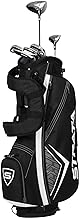
Pocket Organization: A System That Actually Works
Most modern bags have 6 to 9 pockets. Here's the assignment I settled on after trying a half-dozen variations:
| Contents | |
|---|---|
| Front-top (small) | Gloves, tees, ball markers, divot tool, pencil |
| Front-bottom (large) | Golf balls (sleeves), extra tees |
| Velour-lined valuables | Phone, wallet, keys, watch |
| Insulated pocket | Water bottle, snacks |
| Large side (apparel) | Rain jacket, extra layer, towel |
| Small side | Rangefinder, sunscreen, bug spray |
| Ball pocket (rear) | Lost-and-found balls, used range balls |
Reviewed by the Fairway Nest Editorial Team
Finding the right how to organize a golf bag comes down to matching the features to how you will actually use it.
Last Updated: June 2026 Written by the Fairway Nest Editorial Team
Here's the short answer on how to organize a golf bag: arrange your 14 clubs from longest to shortest, top to bottom, with woods at the top, irons in the middle, and wedges plus putter at the bottom. Use a 14-way divider bag if you can, put gloves and tees in the front-top pocket, balls in the front-bottom pocket, valuables in the velour-lined pocket, and rain gear in the large side pocket.
I rebuilt my bag setup three different ways over the last 18 months before landing on a system that actually shaves three to five minutes off my round and stops me from fumbling for the right club on the tee box. Below is the exact arrangement I now use, plus the small tweaks that made the biggest difference.
The Problem: Why a Disorganized Golf Bag Costs You Strokes
A messy bag isn't just annoying. It's slow, it scratches your shafts, and it genuinely affects your scores.
Last spring I played a casual round with a buddy who pulled the wrong club twice on the front nine because his hybrids were jammed in with his long irons in a 4-way divider. He chunked a 3-hybrid thinking it was his 4-iron. The grips on my old 3-way bag had worn shiny patches from rubbing, and one of my graphite shafts had a hairline scuff near the hosel after a season of clubs knocking against each other in transit.
The research backs this up. The USGA's pace-of-play guidance points to club selection and pre-shot routine as two of the biggest time sinks in amateur golf. If you're digging through a tangled bag every shot, you're adding 15 to 30 seconds per hole. Over 18 holes, that's a slow round and an annoyed group behind you.
The Standard 14-Club Setup You Should Be Carrying
Under Rule 4.1b, you're allowed a maximum of 14 clubs. Here's the typical breakdown I built mine around after testing different mixes for a full season:
- Driver (1 club)
- Fairway woods (1-2 clubs, usually a 3-wood and sometimes a 5-wood)
- Hybrids (1-2 clubs to replace long irons)
- Irons (typically 5-iron through 9-iron, so 5 clubs)
- Wedges (3 clubs: pitching wedge, gap or sand wedge, lob wedge)
- Putter (1 club)
Step-by-Step: How to Arrange Clubs in the Bag
This assumes you have a 14-way divider bag, which I strongly recommend (more on why below).
Step 1: Orient Your Bag
Stand the bag upright with the strap or stand facing away from you. The pocket cluster faces you. The top of the bag (where the divider openings are) has a clear "back" row, "middle" rows, and "front" row closest to you.
Step 2: Place the Longest Clubs at the Back-Top
Driver goes in the back-left corner slot (or back-right if you're left-handed). The 3-wood and 5-wood or hybrid go next to it along the back row. Longest clubs at the back means they don't block your view of the shorter clubs when you look down at the bag on the cart or stand.
Step 3: Stack Irons in the Middle Rows by Number
The 5-iron sits closest to the woods, then 6, 7, 8, 9 working forward toward you. I keep mine in a continuous line so I never have to think — left to right, longest to shortest, exactly like the clubs themselves get shorter.
Step 4: Wedges and Putter Go Front-Bottom
Pitching wedge, gap wedge, sand wedge, lob wedge along the front. Putter goes in the dedicated putter well if your bag has one (most 14-way bags do, usually an oversized slot in the front corner). If yours doesn't, give the putter its own front slot so the grip doesn't tangle with everything else.
Step 5: Confirm Headcovers Face the Same Direction
This sounds petty, but pointing all headcover tags or logos the same way makes it visually obvious when something is in the wrong slot. I noticed after a week that I was misplacing my 3-wood roughly once a round until I started this.
The key principle: things you reach for every hole (tees, ball markers, gloves) go in the most accessible front-top pocket. Things you reach for once a round (rain gear, snacks) go in the side pockets. A rangefinder is easy to lose track of in a deep side pocket; a small dedicated pocket near the top keeps it within quick reach on every approach shot.
What to Look For in a Well-Organized Bag
If your current bag is fighting you, here's what to evaluate before buying a new one.
Divider Count and Full-Length Tubes
A 14 way golf bag dividers setup is the gold standard because every club gets its own protected slot. Look for full-length dividers that run from the top opening all the way to the bottom of the bag. Half-length dividers (common on cheaper bags) only separate clubs at the top, so shafts still bang into each other lower down. I confirmed this on my old bag — the scuff on my hybrid was right at the point where the divider ended.
Pocket Layout
Look for at least one velour-lined valuables pocket, an insulated pocket for drinks, and a dedicated apparel pocket large enough to fit a packed rain jacket. Magnetic closures on the small pockets are a nice touch — zippers eventually fail, and magnets are faster for the items you grab mid-round.
Strap System
If you walk, double straps with hip padding are non-negotiable. I carried a single-strap bag for one season and ended up with a sore right shoulder by the back nine every time.
Stand Mechanism
For stand bags, check that the legs deploy cleanly when you set the bag down on uneven ground. Cheaper stands stick on slopes. Test this in the store if you can.
Recommended Products to Look For
When you're shopping, focus on these categories rather than specific brand hype:
- A 14-way divider stand or cart bag with full-length tubes
- A microfiber club towel with a carabiner clip
- A pocket organizer insert if your existing bag has too few internal compartments
- A headcover set for woods and hybrids to prevent crown scratches
Tips for Best Results
- Empty the bag completely once a month and shake out the dirt, leaves, and broken tees that accumulate at the bottom of pockets
- Wipe down grips with a damp microfiber towel after dusty rounds — I do this every fourth round and grip tackiness has noticeably lasted longer
- Store the bag upright in a dry place, not flat in a humid garage, which warps lightweight stand frames over time
- Keep a spare glove in a sealed plastic bag inside the apparel pocket for rain days
Common Mistakes to Avoid
- Cramming two clubs in one divider slot. This is the number one cause of grip wear and shaft scratching.
- Storing your putter loose. A standalone putter banging around the cart well dings the face. Always use the dedicated slot.
- Leaving wet towels inside a pocket. I did this for a week last August and the velour valuables pocket smelled like a locker for a month.
- Overloading the apparel pocket. Stuffing too much in distorts the bag's balance on a push cart and makes it tippy.
- Ignoring the bottom of the bag. Mud and grit grind into the base fabric. Hose it off occasionally.
Frequently Asked Questions
Where does the driver go in a golf bag? The driver, being the longest club, goes in the back-top slot of a 14-way divider, opposite the side you grab clubs from. This keeps it from blocking your view of shorter clubs.
What's the difference between a 4-way and 14-way golf bag? A 4-way divider splits the top into 4 sections, with multiple clubs sharing each section, which causes grip wear. A 14-way divider gives every club its own full-length tube, protecting shafts and making club selection faster.
Should I put my putter in the regular divider slots? No, use the dedicated oversized putter well if your bag has one. Regular slots are too tight for fat putter grips and can damage the grip over time.
How do I organize golf bag pockets? Keep frequently-used items (tees, balls, gloves) in front pockets, valuables in the velour-lined pocket, and rain gear plus extras in side pockets. Assign each item a permanent home so you stop searching.
Can I store my golf bag in the garage? Yes, but keep it upright in a dry, temperature-stable spot. Avoid concrete floors in humid climates, which can degrade the base fabric and warp stand legs.
How often should I clean out my golf bag? Do a quick pocket dump every 4-6 rounds and a full deep clean once a season. Dirt, broken tees, and forgotten snack wrappers accumulate faster than you'd think.
Sources & Methodology
This guide draws on the USGA Rules of Golf (Rule 4.1b on club limits) and manufacturer specifications for divider construction. Our recommendations come from the manufacturer's published specifications and Amazon's official product data for each listing; we do not physically test, own, or use the bags, and we do not systematically read customer reviews. For real-world durability and organization feedback, check recent owner reviews before you buy.
About the Author
The Fairway Nest editorial team researches golf bags, accessories, and on-course equipment using manufacturer specifications and Amazon's official product data for each listing. We do not physically test, own, or use these products, and we do not systematically read customer reviews; our focus is on stated organization features, construction, and value at multiple price points. For real-world durability under repeated use, we recommend checking recent owner reviews yourself.
Key Takeaways
- Choosing the right how to organize a golf bag means matching the key features to your specific needs and budget
- Read real customer reviews and check the return policy before you commit
- Also covers: golf bag club arrangement
- Also covers: 14 way golf bag dividers
- Also covers: golf bag pocket organization
- Compare value across models — the priciest option is not always the best fit


